Plugged In vs. Powered Up: The Real-World Verdict on Wireless Charging for Vape Mods
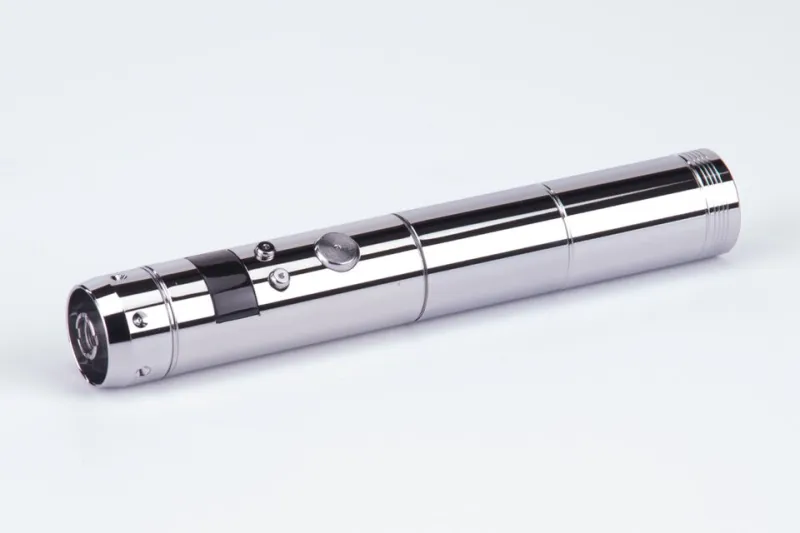
Photo: Seawhelan, CC BY-SA 4.0, via Wikimedia Commons
Wireless charging feels like table stakes at this point. Drop your phone on a pad, walk away, come back to a full battery — no cable hunting, no port wear, no drama. Apple, Samsung, and Google have all made it a cornerstone feature. So when premium vape mod manufacturers started quietly rolling out Qi-compatible devices over the last couple of years, the tech-savvy vaping community had a reasonable expectation: this should just work, and it should be great.
The reality is a bit more complicated. Wireless charging in vape hardware is real, it's improving, and for certain users it genuinely makes life easier. But it also comes with tradeoffs that a spec sheet won't tell you about. Let's pull this apart properly.
How Wireless Charging Actually Works in a Vape Mod
For anyone who wants the technical foundation: most wireless charging implementations in vaping hardware use the Qi standard, the same protocol used by the majority of Android phones and iPhones since the iPhone 8. Qi operates via inductive charging — a transmitter coil in the charging pad generates an alternating electromagnetic field, which induces a current in a receiver coil built into the device. That current charges the battery.
The engineering challenge in vape mods is packaging. A typical box mod has to accommodate a battery cell (or multiple cells), a chipset, an atomizer connection, and now a receiver coil, all within a form factor that needs to stay pocketable. That's a tight squeeze, and it's one reason wireless charging has appeared first in single-battery devices and pod systems rather than high-wattage dual-cell mods.
Current Qi implementations in vaping hardware typically max out around 10W of wireless charging power. Compare that to the 15W or 25W fast wireless charging on flagship phones, and you're already looking at slower replenishment times than what most of us are used to.
The Battery Life Math You Need to Know
Let's talk real-world numbers, because this is where a lot of marketing copy gets vague.
A standard 18650 cell — the workhorse of the vape mod world — holds around 3,000–3,500mAh at a nominal 3.7V. Charging that via USB-C at 2A takes roughly 90 minutes to two hours. A 10W wireless charge on that same cell? You're looking at closer to three to four hours for a full cycle, depending on thermal management and the efficiency of the receiver coil.
For a lot of users, especially those who charge overnight, that time difference is essentially irrelevant. But for someone who needs a quick top-up between morning and afternoon sessions, the speed gap is real and meaningful.
What's less often discussed is charging efficiency. Inductive charging inherently loses more energy to heat than direct wired charging — typically 10–20% more energy consumed from the wall for the same amount of charge delivered to the battery. Over hundreds of charge cycles, that adds up both in electricity cost and, more importantly, in heat stress on the battery cell itself. Heat is the enemy of lithium-ion longevity, and anything that consistently adds thermal load shortens your battery's usable lifespan.
Where Wireless Charging Genuinely Wins
That said, dismissing wireless charging entirely would be intellectually lazy. There are real, tangible advantages — and they matter a lot depending on how you use your device.
Port wear elimination is the big one. USB-C ports on vape mods take a beating. They're often used in conditions that aren't exactly gentle — pockets full of pocket lint, outdoor use, the casual one-handed cable plug that misses the port twice before connecting. Over time, that physical stress degrades the port. Devices with wireless charging as the primary method sidestep this entirely, and that's a meaningful durability upgrade for heavy daily users.
Convenience in specific contexts is genuinely underrated. If you have a wireless charging pad on your nightstand, your desk, and in your car, the friction of keeping your mod topped up drops to near zero. No cable to grab, no decision to make. For users already living in a wireless charging ecosystem, adding a mod to that routine costs nothing extra.
Some newer pod systems have also started including wireless charging as a secondary option alongside USB-C, giving users the best of both worlds without forcing a choice. That hybrid approach is arguably the smartest implementation we've seen so far.
Why Adoption Has Been Slower Than Expected
Given that wireless charging is well-established technology, the pace of adoption in vaping hardware has been noticeably cautious. A few factors explain this.
First, the regulatory environment around vaping hardware in the US creates hesitancy around introducing new variables. Any change to charging architecture requires additional safety validation, and manufacturers are understandably conservative about adding complexity to devices that already face scrutiny.
Second, the vaping community skews toward users who prioritize performance metrics — wattage output, coil compatibility, battery capacity — over convenience features. Wireless charging doesn't make your mod hit harder or your coils last longer. For a segment of users, it's genuinely low on the priority list.
Third, and perhaps most practically: removable batteries. A significant portion of serious mod users run external chargers and keep spare cells on hand. For that crowd, wireless charging is solving a problem they don't have. The ability to swap a dead 18650 for a charged one in thirty seconds will always beat waiting on any charging method.
So Which Technology Actually Wins?
Honest answer: it depends on who you are, and the tech press doesn't say that enough.
If you're a high-wattage power user running a dual-cell mod, chasing maximum output, and already maintaining a collection of spare batteries — wireless charging offers you almost nothing right now. Stick with USB-C fast charging and a quality external charger. You'll get faster top-ups, better battery longevity, and more flexibility.
If you're running a sleek pod system or a compact single-cell device, living that wireless ecosystem life, and charging habits are more about passive overnight top-ups than speed — wireless charging is a genuine quality-of-life upgrade. The port protection alone may justify the modest price premium on compatible devices over a two-to-three year ownership window.
The premium for wireless-capable mods currently runs $15–$30 above comparable wired-only devices at similar spec levels. That's not outrageous, but it's also not trivial. Do the math against how much you'd spend replacing a USB-C port repair or a degraded battery, and the value proposition becomes clearer.
The Verdict from Geek Bar Vapes
Wireless charging in vape mods isn't a gimmick — but it's not a revolution either. It's a maturing feature that makes real sense for a specific type of user, and manufacturers are slowly getting better at implementing it without sacrificing the performance specs that actually drive purchasing decisions.
Watch this space. As coil efficiency improves and form factors continue to evolve, the case for wireless charging is only going to get stronger. For now, know what you need, match the tech to your habits, and don't let the spec sheet make the decision for you.