Air-Gapped and Proud: The Case for Vape Mods That Never Phone Home

Look around your house right now. Your doorbell has an app. Your lightbulbs have an app. Somewhere out there, someone is being asked to pair their water bottle over Bluetooth. Every gadget you own is racing to join the Internet of Things, whether you asked for it or not.
And then there's your vape mod. Sitting there on your desk. Doing its job. Asking for exactly nothing.
At some point in the last few years, this stopped being a limitation and started being a luxury. Welcome to the era of the air-gapped vape — the last gadget category that looked at the smart-device gold rush and said, "nah, we're good."
The Rebellion Nobody Planned
Here's the funny part: vapers didn't set out to make a statement. The mod world went offline partly by accident, partly by design, and partly because nobody could figure out what an app would actually do.
Sure, some connected vaporizers exist. Early smart vape attempts promised puff tracking, cloud-synced wattage profiles, even social features — because apparently what vaping needed was a feed. Most of them quietly died on the vine. The community's verdict was swift and brutal: the app added nothing the three buttons and an OLED screen on the device itself didn't already handle better.
So the market spoke, and the market said: give us a device that boots in half a second, fires when I press the button, and doesn't require a firmware update to change my airflow. Manufacturers listened. Today, "no app required" isn't a confession — it's printed on the box like a badge of honor.
What Your Cloud-Connected Vaporizer Would Know
Let's talk about the part that should make any privacy-conscious geek squirm. A connected vape is, functionally, a sensor-laden device that goes everywhere you go and monitors your intake behavior. Now imagine that data stream: how often you puff, when you puff, where you were when you did it, and — if the device links to a nicotine-strength profile — a pretty detailed map of your dependency patterns.
That's not paranoia. That's just what the telemetry would be. Every company with a companion app has a data policy, and every data policy in 2024 is a little bit of a mystery wrapped in an EULA nobody reads. Your vape habits sit at the intersection of health data, location data, and behavioral data — three of the most sensitive categories there are.
A standalone mod, by contrast, has the privacy posture of a hammer. It knows nothing. It remembers nothing. There is no account to breach, no database to leak, no terms-of-service update to quietly expand what's collected. In a world where even your car manufacturer might be selling your driving data, a device that physically cannot transmit anything feels almost radical.
The Performance Argument Nobody Expected
Here's the counterintuitive bit: cutting the cord on connectivity didn't just protect privacy — it made mods better.
Think about what a smart device spends its resources on. Radios. Background processes. Update checks. Companion-app handshake protocols. Now strip all of that out and pour those engineering dollars into what actually matters: a chipset with fast ramp-up, accurate temperature control, a battery management system that squeezes every last milliamp out of your cells, and a display you can read in direct sunlight.
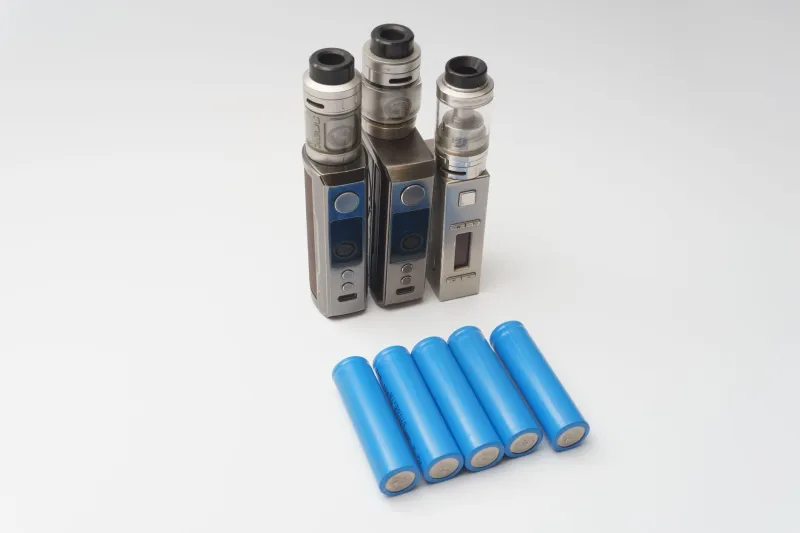
That's exactly what happened. Freed from the obligation to play nice with iOS and Android, mod makers went deep on hardware. The premium standalone mods on the market today — the ones with dual 18650 or 21700 bays, precise TC curves, and chipsets that fire in microseconds — are arguably the most focused gadgets you can buy. No bloat. No subscriptions. No "premium features" locked behind a login.
Compare that to the smart-home device on your shelf that became a paperweight when the company sunset its servers. Your mod will fire in twenty years. Try saying that about your smart speaker.
The Standalone Shortlist: What to Look For
If you're shopping for a mod that will never, ever ask you to "finish setup in the app," here's what separates the great ones from the merely good:
- Variable wattage done right. You want a chipset with real adjustment granularity — think 1-watt steps up the range — rather than vague preset modes.
- Temperature control that actually works. Proper TC with support for nickel, titanium, and stainless steel coils, with adjustable TCR values for the tinkerers among us.
- Replaceable batteries. A mod with swappable cells is a mod you own, not a mod you rent until the sealed pack dies.
- A screen worth staring at. Bright, informative, fast. This is your device's only interface, so it should be a good one.
- USB-C, obviously. The one place modern standards should absolutely apply.
The beauty of the category is that you don't need to research a company's cloud infrastructure, read their privacy policy, or wonder whether a server shutdown will brick your purchase. What you see on the device is the whole deal.
The Last Gadget With Nothing to Prove
There's something almost poetic about it. The tech industry spent a decade convincing us that every object needs an internet connection to reach its potential — and the humble vape mod, a device built by and for people who love technology, responded by becoming the last mainstream gadget that's complete without one.
It's not anti-tech. Nothing about a mod with a precision chipset and adjustable TCR values is anti-tech. It's pro-agency: technology that does exactly what you tell it, collects exactly nothing, and doesn't need your Wi-Fi password to earn its place on your desk.
In ten years, when your smart fridge demands a subscription and your sneakers require a firmware update, you'll look over at your mod — offline, reliable, unbothered — and understand why so many geeks consider it the last honest gadget in the house.
Air-gapped and proud, baby.