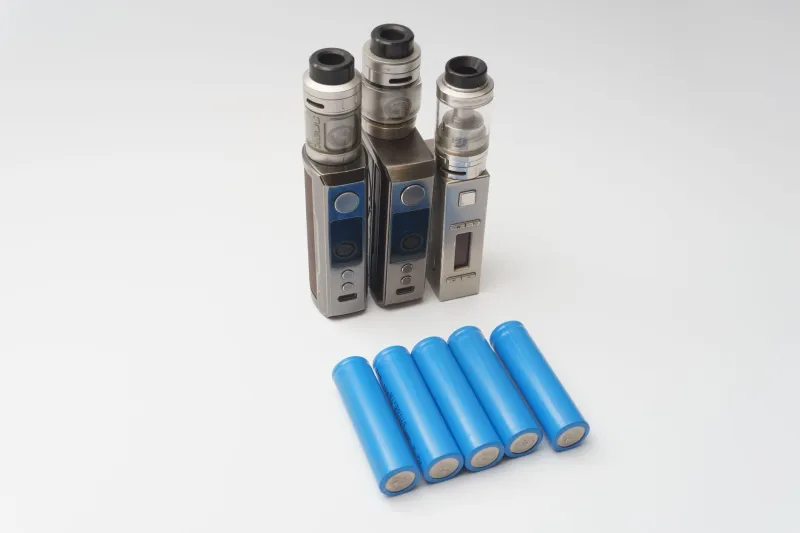
The Vaper's Disaster Recovery Kit: Redundancy Planning for Your Daily Driver
Picture this: it's Sunday night, you're settling in for a long session, and your mod throws an error you've never seen before. No backup battery. No spare coil. The bottle of juice you've been nursing is down to fumes. Congratulations — you've just experienced a total system outage with zero redundancy in place.
If you've ever worked in IT, this scenario probably triggers some form of professional PTSD. The whole point of disaster recovery planning is that failures aren't a matter of if, they're a matter of when. Your vape setup is a piece of hardware you depend on daily, and it deserves the same failover strategy as your home server. Let's build the kit.
Why Redundancy Beats Repair
The core principle of any good DR plan is simple: recovery time matters. When your primary rig goes down, every hour you spend waiting on a replacement coil from some warehouse two states away is an hour of downtime. A well-stocked spares kit collapses that recovery time to about thirty seconds — the time it takes to walk to your drawer and swap in the backup.
Think of it like a hot spare drive in a RAID array. You hope you never need it, but the day you do, you'll be grateful it was sitting there, ready to spin up.
The Core Kit: Your Bare Minimum Uptime Guarantee
Here's the checklist. Consider this your baseline SLA:
- Backup coils (minimum two): Coils are the most common point of failure, period. They burn out, they flood, they taste like a burnt tire. Keep at least two spares of the exact coil your current tank uses — and check them whenever you switch tanks, because a spare for hardware you no longer own is dead weight.
- A second battery (or second mod): If you run a single-battery mod, a charged spare battery is non-negotiable. If you run an internal-battery device, a cheap backup mod is your failover unit. It doesn't need to be fancy — it needs to work.
- Backup charger and cable: USB-C cables have a failure rate that borders on statistical fraud. Keep one dedicated charging cable that never leaves your kit, so you're not scavenging the couch cushions at midnight.
- O-rings and seals: These tiny rubber gaskets are the gasket-and-seal equivalent of thermal paste — invisible until they fail, catastrophic when they do. Most tank manufacturers include a spares bag; if yours is long gone, a generic assortment kit costs about the same as a coffee.
- Reserve juice (at least one full bottle): Running your all-day vape down to the last milliliter is the vaping equivalent of letting your disk hit 100% capacity. When the new bottle arrives, shelve the old one. Rotate stock like a sane person.
- Cotton and wire (for the RBAs crowd): If you rebuild, your spares kit includes a roll of cotton and your preferred wire gauge. Rebuildables are already the DIY path, but even DIY needs consumables.
Organizing It Like an Actual Workbench
A spares kit thrown loose in a junk drawer is not a spares kit — it's an archaeological dig. You want the organization standards of a proper tech workbench.
Get a parts organizer. Those plastic hardware organizers with adjustable compartments, the kind used for screws and FPGA jumpers, are perfect. Coils in one row, o-rings in another, spare pods below. Label the compartments. Yes, actually label them. A label maker costs twenty bucks and eliminates all future guesswork.
Separate hot spares from cold spares. Hot spares are what you reach for today — the coil that goes in when the current one dies. Cold spares are long-term reserve: that sealed backup mod or the unopened juice bottle. Keeping them physically separate prevents you from raiding the reserve and forgetting to restock.
Do a quarterly audit. Set a recurring calendar reminder — the same way you'd patch servers on a schedule. Check battery health, verify coil compatibility with your current tank, and make sure nothing's expired or degraded. Five minutes, four times a year.
The Panic-Proof Payoff
Here's the thing about redundancy: the value isn't in the gear itself, it's in the elimination of that specific flavor of panic. A dead mod with no backup is a small crisis. A dead mod with a labeled organizer three feet away is a thirty-second inconvenience.
Total investment for a solid kit? Usually somewhere between $30 and $60, depending on how serious your backup mod situation gets. That's less than most people spend on a single tank, in exchange for never again experiencing the particular misery of a hardware outage with no rollback plan.
Your rig has a uptime SLA now. Make sure the infrastructure can actually deliver on it.