Stop Trusting the Number on the Box: What Battery Specs Don't Tell You About All-Day Vaping
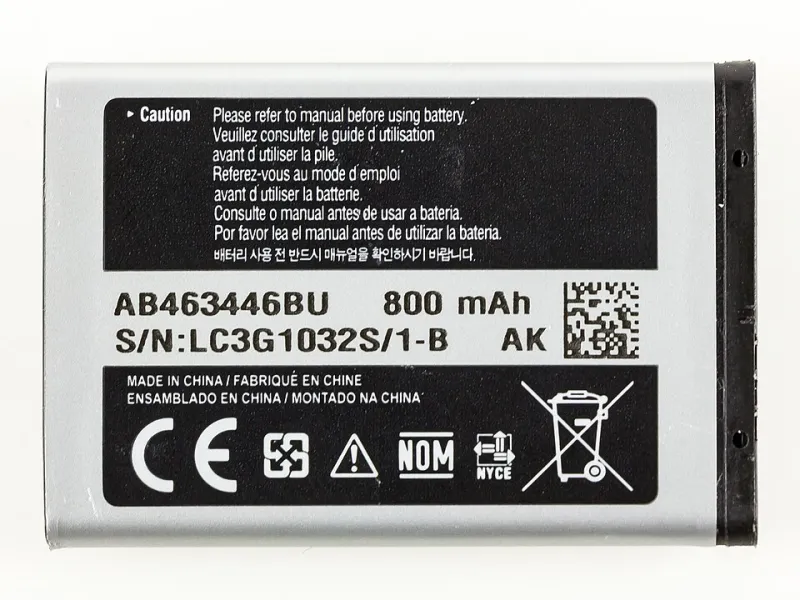
Photo: Raimond Spekking, CC BY-SA 4.0, via Wikimedia Commons
You've been there. It's hour three of a ranked session, your squad is finally clicking, and your vape mod decides that right now is the perfect time to flash a low-battery warning. You glance at the specs — 3000mAh, the box said. Should've lasted all night. So what went wrong?
Short answer: the number on the box was never the whole story. Long answer? That's what we're here for.
mAh Is a Ceiling, Not a Promise
Milliamp-hours measure theoretical charge capacity under ideal lab conditions — think room temperature, minimal load, no voltage sag. Real life doesn't work that way. The moment you start pulling watts through a low-resistance coil while your mod is running its display, firing algorithms, and managing temperature control, you're drawing current in bursts that laboratory ratings simply don't account for.
Think of it like RAM in a gaming PC. Advertised bandwidth looks great on a benchmark. Drop it into an actual game with background apps, Discord running, and a stream encoding on the side, and you're living in a different world. Battery capacity ratings have the same problem — they're measured under conditions that don't reflect sustained, real-world use.
The metric that actually matters is usable capacity, which factors in voltage cutoff thresholds, discharge curve behavior, and how aggressively your mod pulls current. A battery that holds 3000mAh to spec might only deliver 2100–2400mAh of genuinely usable energy before your mod's protection circuit kicks in and shuts things down.
The Chemistry Actually Matters
Not all lithium-ion cells are built the same, and the differences hit hard when you're deep into a gaming session.
High-drain cells (think 20A+ continuous discharge ratings) are optimized for power delivery over raw storage. They tend to have slightly lower mAh ratings but maintain voltage stability under heavy load — meaning fewer "brown-out" moments where your mod starts behaving erratically before the battery technically hits empty. For vapers running sub-ohm builds with high wattage outputs, this trade-off is usually worth it.
High-capacity cells, on the other hand, pack more mAh but often have softer discharge curves. They're ideal for lower-wattage, mouth-to-lung setups where you're not hammering the battery with aggressive current draws. If you're a casual sipper rather than a cloud chaser, the extra capacity can genuinely extend your session.
The mistake most people make is mixing up these use cases — buying a high-capacity cell for a high-drain mod, then wondering why performance feels inconsistent.
Temperature Is Quietly Wrecking Your Runtime
Here's something battery spec sheets almost never mention: lithium-ion cells lose meaningful capacity as temperature drops. We're talking about a 20–30% reduction in effective capacity at temperatures below 50°F. If you're gaming in a basement that runs cold in winter, or you keep your setup near an AC vent in summer, your battery is working against physics in ways no mAh rating can save you from.
On the flip side, heat degrades cells over time. Running your mod at high wattage for extended periods generates heat that slowly eats into long-term battery health — a factor that compounds over weeks and months of marathon sessions. The battery that performs great in month one might be noticeably weaker by month four, even if the mAh rating hasn't technically changed.
The practical takeaway: store your batteries at room temperature, avoid leaving a hot mod sitting on a surface that traps heat, and factor in seasonal performance shifts if you vape in variable environments.
Discharge Curves: The Graph Nobody Shows You
If you really want to geek out on this — and you're on the right website if you do — pull up discharge curve graphs for your specific cells. Manufacturers like Mooch (a well-known battery testing resource in the vaping community) publish independent test data that shows exactly how voltage behaves from full charge to cutoff under various current loads.
What you're looking for is a flat discharge curve with minimal voltage sag under your typical load. A cell that drops voltage sharply at moderate current draws will cause your mod to reduce power output or shut down earlier than expected, regardless of remaining capacity. A flatter curve means more consistent performance throughout the charge cycle — which translates directly to a more reliable experience during long sessions.
This is the kind of data that separates a genuinely informed battery choice from one based on marketing copy.
Dual-Battery Mods: The Math and the Reality
Running a dual-18650 or dual-21700 setup doubles your theoretical capacity, but it also introduces cell-matching as a variable. Mismatched cells — even from the same brand and model — can discharge at slightly different rates, which causes one battery to work harder than the other. Over time, this creates an imbalance that reduces total usable capacity and accelerates degradation in the weaker cell.
If you're running a dual-battery mod for all-day use, buy your cells in matched pairs from the same production batch and replace them together. It sounds fussier than it is, and the payoff in consistent runtime is real.
Practical Picks Based on How You Actually Vape
Rather than chasing the biggest mAh number on the shelf, match your battery choice to your actual usage pattern:
- High-wattage sub-ohm setups (60W+): Prioritize continuous discharge rating over raw capacity. Look for cells rated at 20A or higher with solid independent test data backing that claim.
- Mid-range regulated mods (30–60W): Balanced cells that offer solid capacity without sacrificing discharge performance. The 21700 form factor generally shines here, offering more physical volume — and thus more capacity — without compromising drain capability.
- Low-wattage and MTL setups: Here's where high-capacity cells make genuine sense. Lower current draws mean the capacity rating is more representative of actual runtime, and voltage sag is less of a concern.
- Marathon gaming sessions: Consider keeping a charged spare in rotation. It's a lower-tech solution than optimizing cell chemistry, but it's the most reliable way to guarantee you never go dark mid-session.
The Takeaway
Battery marketing is designed to make one number do all the heavy lifting, and that number — mAh — is one of the least useful metrics for predicting real-world vaping performance. Chemistry, discharge curves, temperature sensitivity, cell matching, and actual load conditions all play bigger roles in how long your mod lasts during a genuine all-day or all-night session.
Treat battery selection the way you'd treat any other component in a performance build: do the research, look at independent test data, and match the spec to the actual use case. Your vape mod — and your gaming sessions — will thank you for it.