Feel the Difference: How Haptic Feedback Is Rewriting What a Great Vape Mod Actually Feels Like
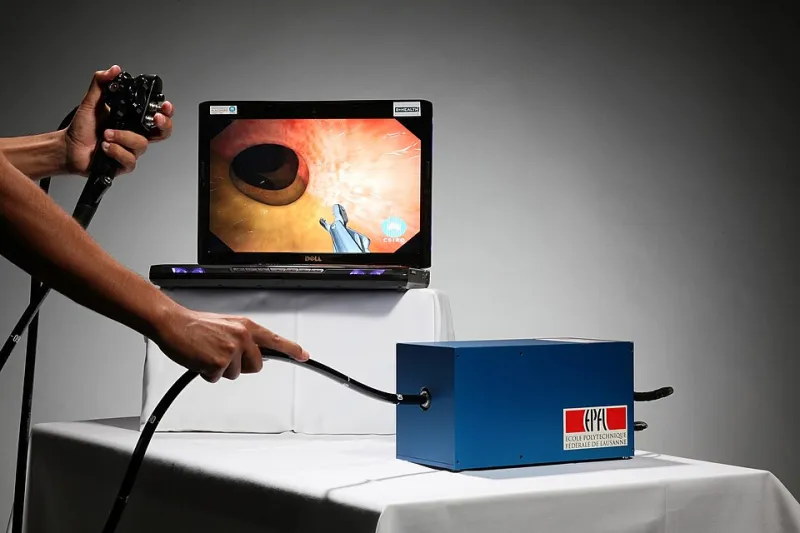
Photo: division, CSIRO, CC BY 3.0, via Wikimedia Commons
There's a moment every gamer knows — the split-second a DualSense controller rumbles against your palms during a PS5 firefight, delivering information your eyes haven't even processed yet. Your hands just know something happened. Now imagine that same principle applied to your vape mod. Not a clunky vibration alarm, not the blunt buzz of a budget phone notification, but a precisely tuned tactile pulse that tells you a menu item was selected, a wattage threshold was hit, or your puff duration just crossed into territory you might want to rethink.
That's the promise of haptic feedback in modern vaping hardware — and it's a bigger deal than it probably sounds at first.
More Than a Gimmick: What Haptic Tech Actually Does
Let's get the obvious concern out of the way: yes, the first time most vapers hear "haptic feedback on a mod," their brain goes straight to gimmick territory. A vibration motor that buzzes when you fire? Cool for about forty-five seconds, then annoying forever. But that's not what serious haptic implementation looks like in 2024.
Modern haptic systems — the kind showing up in high-end Android flagships and gaming peripherals — use linear resonant actuators (LRAs) rather than old-school eccentric rotating mass (ERM) motors. The difference is massive. ERM motors spin a weighted disc to create vibration, which means they're slow to start, slow to stop, and imprecise by nature. LRAs move a small mass back and forth on a spring, responding to electrical signals in milliseconds. The result is crisp, defined feedback that can be tuned to feel like a click, a thud, a soft tap, or a sharp pulse — each one carrying different meaning.
Apple built an entire design language around this with the Taptic Engine. Haptic designers at gaming companies spend months crafting feedback profiles that communicate specific in-game events without a single pixel on screen. The same philosophy is starting to creep into vaping, and the vapers paying attention are genuinely excited.
The Mods Leading the Charge
A handful of manufacturers have started integrating LRA-based haptics into their flagship devices, and the gap between them and the competition is immediately apparent the second you pick one up.
The best implementations aren't just slapping a motor into an existing chassis — they're building haptic patterns into the UX from the ground up. Navigating a wattage menu gives you a subtle tick with each step. Locking your device delivers a firm, satisfying thud that feels almost mechanical, like snapping a quality latch. Hitting your preset puff duration limit produces a distinct pattern — different from the menu ticks — so you know it's time to ease off without having to glance at a screen.
That last use case is arguably the most practical. During a gaming session, a movie, or any situation where your mod isn't front and center, tactile alerts beat visual ones every time. Your phone already figured this out years ago. Vaping hardware is just catching up.
The Physics of Feel: Why 'Weight' Matters So Much
Here's something the spec sheets won't tell you: the perceived quality of a device is heavily influenced by haptics, even when users can't articulate why. UX researchers have documented this for years in smartphone design — two phones with identical displays and processors can feel dramatically different in terms of perceived responsiveness based solely on haptic feedback quality.
Vaping is no different. A mod that delivers crisp, well-tuned tactile responses feels more premium than one that doesn't, even if the underlying vape performance is equivalent. There's a psychological weight to good haptics. They signal precision. They communicate that something engineered with care is in your hands.
For discerning vapers — the kind who spend real money on a setup they plan to use daily for years — this matters enormously. It's the same reason mechanical keyboard enthusiasts will spend $200 on switches and spend hours tuning the sound profile. The tactile experience isn't separate from the product. It is the product.
Haptic Patterns as a Design Language
The most sophisticated implementations treat haptic feedback like a communication system. Different patterns mean different things, and users learn them quickly — faster than they'd learn a menu hierarchy or a set of LED color codes.
Think about how your phone handles notifications differently from alarms, or how a fitness tracker distinguishes between a step goal hit and an incoming call. That same layered communication is starting to appear in premium mods. A double-pulse might confirm a profile switch. A long, rolling vibration might indicate the battery is getting low. A sharp triple-tap could signal a coil resistance reading that's outside your preset range.
Once you've used a mod with a well-designed haptic language, going back to one that communicates purely through a tiny screen and a single LED feels genuinely archaic. It's the difference between a car with a heads-up display and one that makes you squint at the gauge cluster.
The Premium Price Question
Good haptic hardware isn't cheap to implement. Quality LRA motors, the firmware sophistication required to program nuanced feedback patterns, and the chassis engineering needed to ensure vibrations transmit cleanly without rattling loose components — all of it adds cost. That's why you'll find the best haptic implementations clustered at the higher end of the market.
Is it worth the premium? For casual vapers who grab their mod a few times a day, probably not a deciding factor. But for the enthusiast crowd — the all-day vapers, the setup-obsessed, the people who've already optimized every other variable — haptics represent one of the last major experiential frontiers left to conquer. When your coil build is dialed in, your wattage is perfect, and your juice is exactly right, the feel of the device in your hands becomes the remaining differentiator. And that's where haptic feedback earns its price tag.
Where This Is All Heading
The trajectory here is pretty clear if you've watched consumer electronics long enough. Haptics started as a novelty in phones, became a differentiator in flagships, and are now table stakes for anything positioning itself as premium. Gaming controllers went through the same arc. Smartwatches are mid-cycle on the same journey.
Vaping hardware is earlier in that curve, which actually makes right now a fascinating moment to pay attention. The brands investing in genuine haptic engineering today are laying the groundwork for what "premium mod" means in five years. The ones ignoring it are betting that vapers won't care — and historically, that's a bet the market tends to punish.
If you've never held a mod with a properly tuned LRA and a thoughtful haptic design language, find a way to get one in your hands. The spec sheet won't prepare you for it. Some things you just have to feel.