Buy Once, Vape Forever: How to Build a Setup That Doesn't Beg for Upgrades
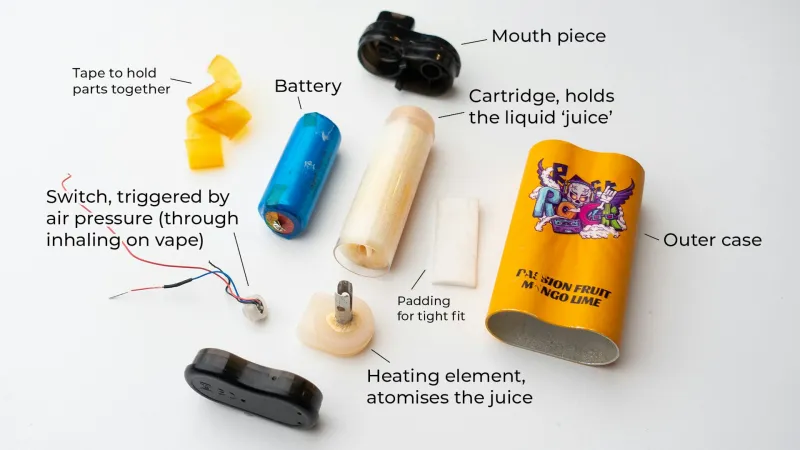
Photo: vape mod disassembled components flat lay on desk, via images.theconversation.com
There's a concept in the software world called tech debt — the idea that shortcuts taken today create compounding problems tomorrow. Developers accumulate it when they patch instead of fix, when they choose speed over structure, when they build on a foundation that was never meant to scale. Sound familiar? If you've been vaping for more than a year, you've probably accumulated your own version of it: a drawer full of half-dead mods, incompatible tanks, and chargers that don't match anything you currently own.
The good news is that the same principles engineers use to escape tech debt apply directly to building a vape setup that actually lasts. It's not about spending more — it's about spending smarter, understanding what you're buying, and thinking a few steps ahead before you commit.
The Upgrade Treadmill Is a Design Feature, Not a Bug
Let's be honest about something: a lot of vape hardware is designed with a shelf life baked in. Manufacturers know that proprietary pod systems lock you into their ecosystem. They know that non-replaceable coil heads eventually push you toward a new tank. They know that sealed internal batteries mean the whole device becomes e-waste the moment that battery degrades past a usable threshold.
This isn't unique to vaping. It's the same playbook Apple ran for years with soldered RAM and non-removable batteries. The difference is that in the broader tech community, there's now a serious right-to-repair movement pushing back against disposability. Vaping enthusiasts would do well to borrow that same energy.
The first step is recognizing which purchases are traps before you make them.
Modular Design: The Single Biggest Longevity Multiplier
If there's one principle worth tattooing on the back of your hand before you shop for a new setup, it's this: modularity extends lifespan.
A box mod that accepts standard 18650 or 21700 batteries is infinitely more future-proof than one with a built-in cell. Why? Because batteries degrade. It's electrochemistry — there's no getting around it. But if your mod takes removable cells, a degraded battery is a five-dollar fix. If it doesn't, you're pricing out a whole new device.
The same logic applies to tanks and atomizers. A tank with a standard 510 connection gives you flexibility. You can pair it with different mods as your preferences evolve without rebuilding your entire setup from scratch. Proprietary connections, on the other hand, chain you to a single ecosystem — and when that ecosystem gets discontinued (and it will), you're starting over.
When evaluating any new hardware, ask yourself: How many of these components can I replace independently? The higher that number, the longer your setup has legs.
What's Worth Splurging On (And What Isn't)
Not everything in a vape setup ages at the same rate, and your budget should reflect that reality.
Invest heavily in the mod itself. This is the brains of your operation — the chipset, the firing mechanism, the interface. A well-built regulated mod from a reputable manufacturer can realistically last five-plus years if it takes external batteries and is built with quality materials. Zinc alloy and stainless steel chassis hold up. Cheap plastic doesn't. Spend here.
Be more conservative with tanks and atomizers. These are consumable-adjacent components. Coil heads wear out, glass sections crack, o-rings degrade. A solid mid-range tank is a smarter buy than a boutique RTA if you're not planning to rebuild your own coils. That said, if you are willing to learn to build, a quality rebuildable atomizer has a near-indefinite lifespan — the coil wire and cotton are dirt cheap to replace.
Don't overspend on accessories. Drip tips, carrying cases, display stands — these are fun, but they're also where a lot of people burn money chasing aesthetics. Enjoy them, but keep them in perspective.
Reading the Fine Print: How to Evaluate a Mod's Real Lifespan
Manufacturers aren't going to advertise their products' weaknesses, so you need to do a little homework before committing.
Start with the warranty. A brand that offers a six-month warranty on a $120 device is telling you something. A brand offering two years is telling you something different. Warranty length is an indirect signal of how confident a manufacturer is in their own build quality.
Next, check parts availability. Can you still buy replacement glass for that tank six months from now? Are coil heads for that pod system still in stock, or are they already showing "limited availability" on most retailers? Communities like Reddit's r/electronic_cigarette are genuinely useful here — longtime users often document exactly which products got orphaned when a manufacturer moved on.
Finally, look at the chipset. Mods running well-supported chipsets (you'll see names like DNA or YiHi come up a lot in enthusiast circles) tend to receive firmware updates that extend functionality and fix bugs over time. A mod with a proprietary, closed-source chip might work great on day one, but there's no safety net if something goes sideways down the road.
The Repairability Question Nobody Asks at the Counter
Here's something worth considering: can you actually fix this thing if it breaks?
For most consumer electronics, the answer is increasingly "not really." But vaping hardware, particularly box mods, is often more repairable than people assume. Loose 510 connectors can be tightened or replaced. Firing buttons can be cleaned or swapped. Screen assemblies on popular mods are available as aftermarket parts on sites like AliExpress for a few dollars.
The key is buying devices where the internal layout isn't a mystery — where screws are accessible, where the community has documented teardowns, and where replacement parts actually exist. A mod with an active user community behind it is fundamentally more durable than one that shipped and disappeared.
This is the right-to-repair ethos applied to vaping, and it's worth embracing.
Building for the Long Game
The endgame setup isn't the flashiest one. It's not the newest one. It's the one that still works exactly the way you want it to three years from now, with minimal fuss and minimal additional spending.
That looks like a quality regulated mod with external battery support, a versatile 510-connected tank or rebuildable atomizer, and a two- or four-bay smart charger that handles multiple battery formats. It looks like knowing which components are meant to be replaced and budgeting for those replacements instead of being surprised by them.
Most importantly, it looks like making deliberate choices rather than reactive ones — buying because something genuinely fits your needs, not because it just dropped and the specs sheet looks impressive.
Tech debt in vaping, like tech debt in software, is always easier to avoid than it is to pay off. Start with the right foundation, and you might be surprised how rarely you feel the itch to upgrade at all.